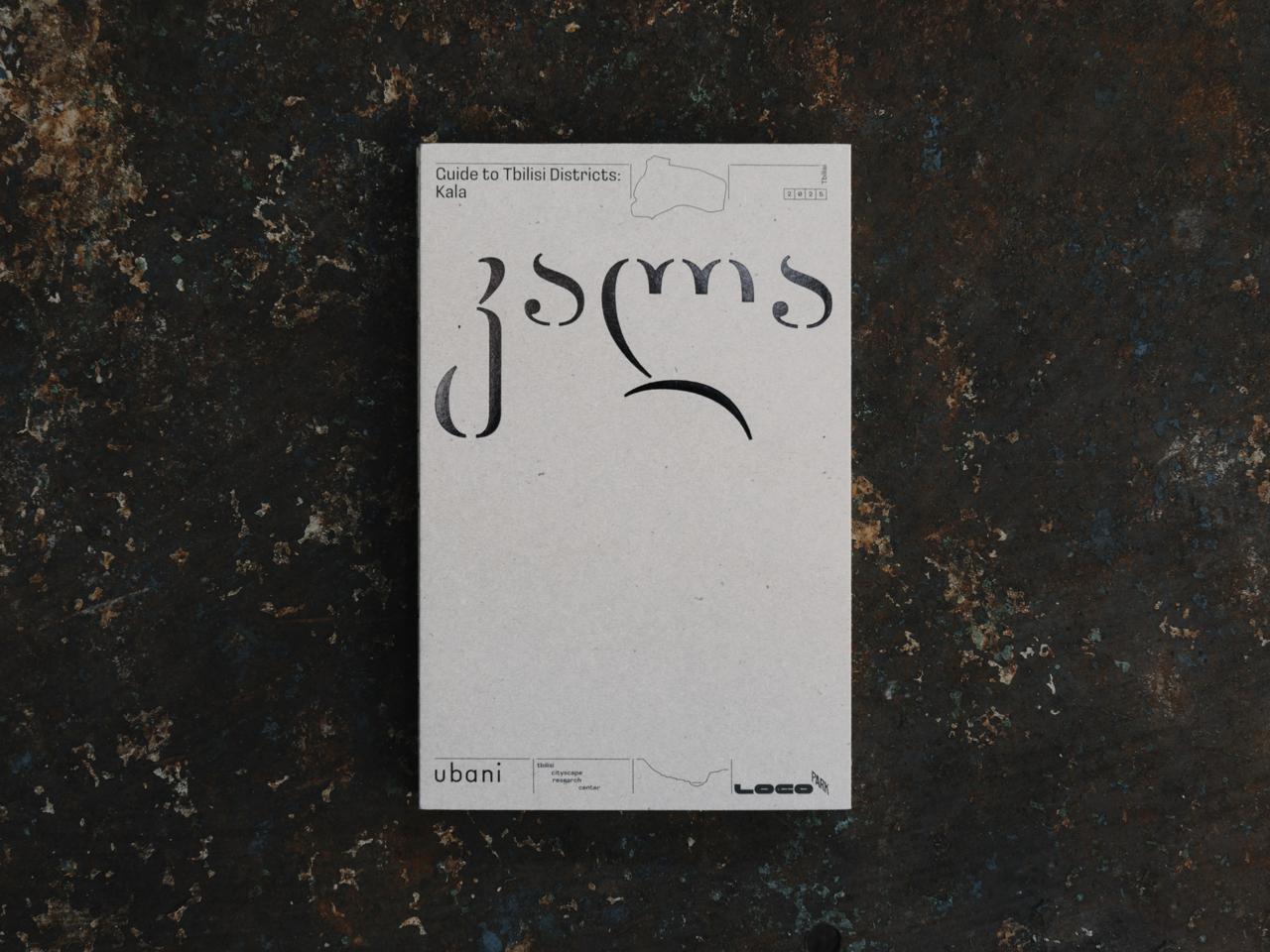
Kala Guidebook is the inaugural volume in a new series dedicated to the districts of Tbilisi. Produced by the Tbilisi-based research platform Ubani, the book approaches the historic Kala district not as a conventional tourist destination but as a complex urban organism composed of spatial elements, historical layers, and everyday practices.
Rather than following the format of a traditional guidebook, the publication organizes the district through six components: Landscape, Streets, Squares, Buildings, Courtyards, and Connections. Each chapter explores a different aspect of Kala’s spatial structure and social life, combining historical research with visual documentation. Developed through extensive on-site observation and photographic research by architect David Brodsky and photographer Grigory Sokolinsky, the guidebook reflects a process of walking, documenting, and navigating the district’s intricate terrain and hidden passages.
As the conceptual author of the series, Brodsky notes that no comparable publications dedicated to Tbilisi’s districts currently exist. The project proposes to study the city through its neighborhoods, treating each as a distinct yet interconnected urban entity. Through this approach, the series seeks to “defragment” the city and establish a framework for researching Tbilisi’s urban fabric.
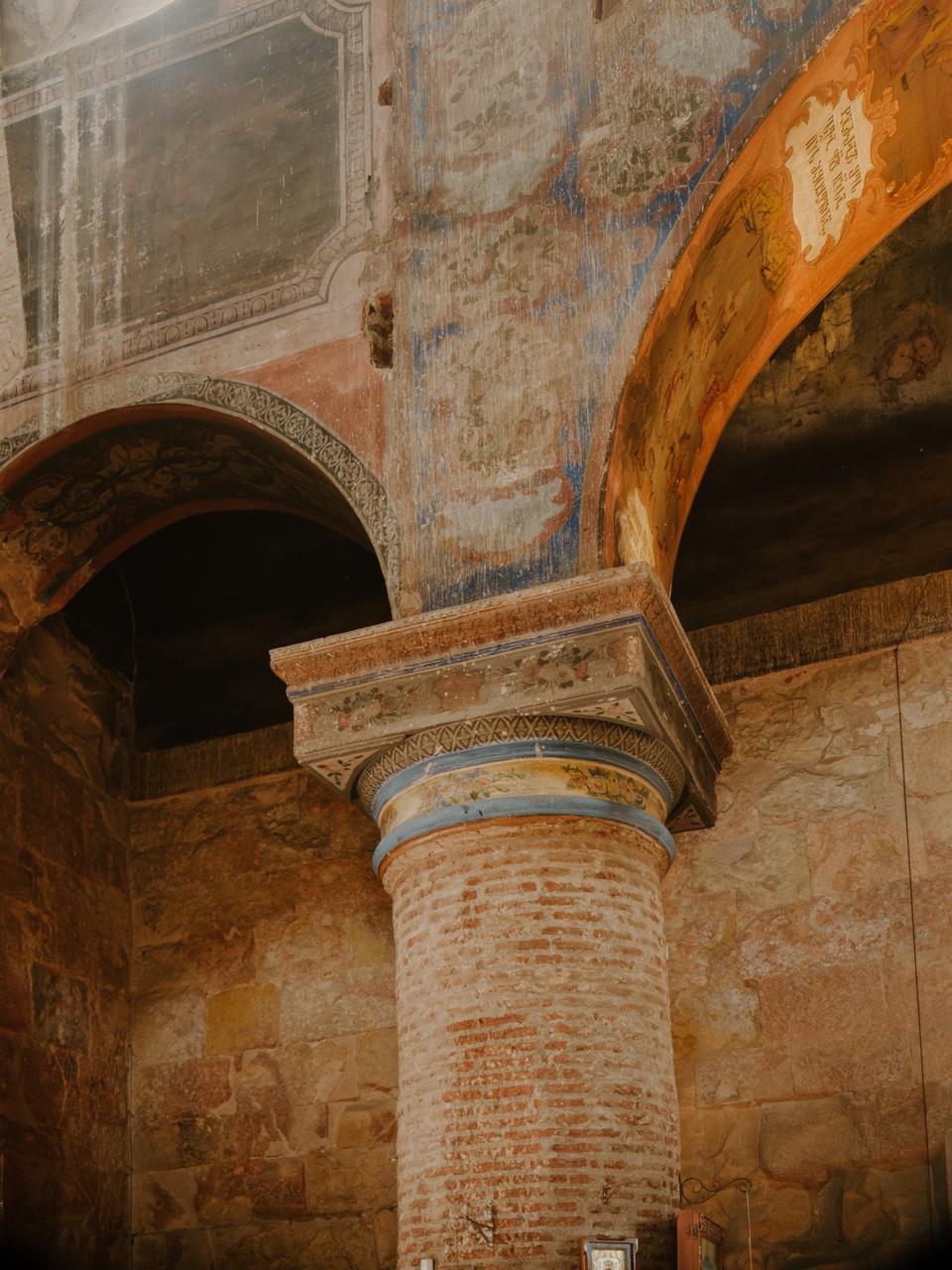
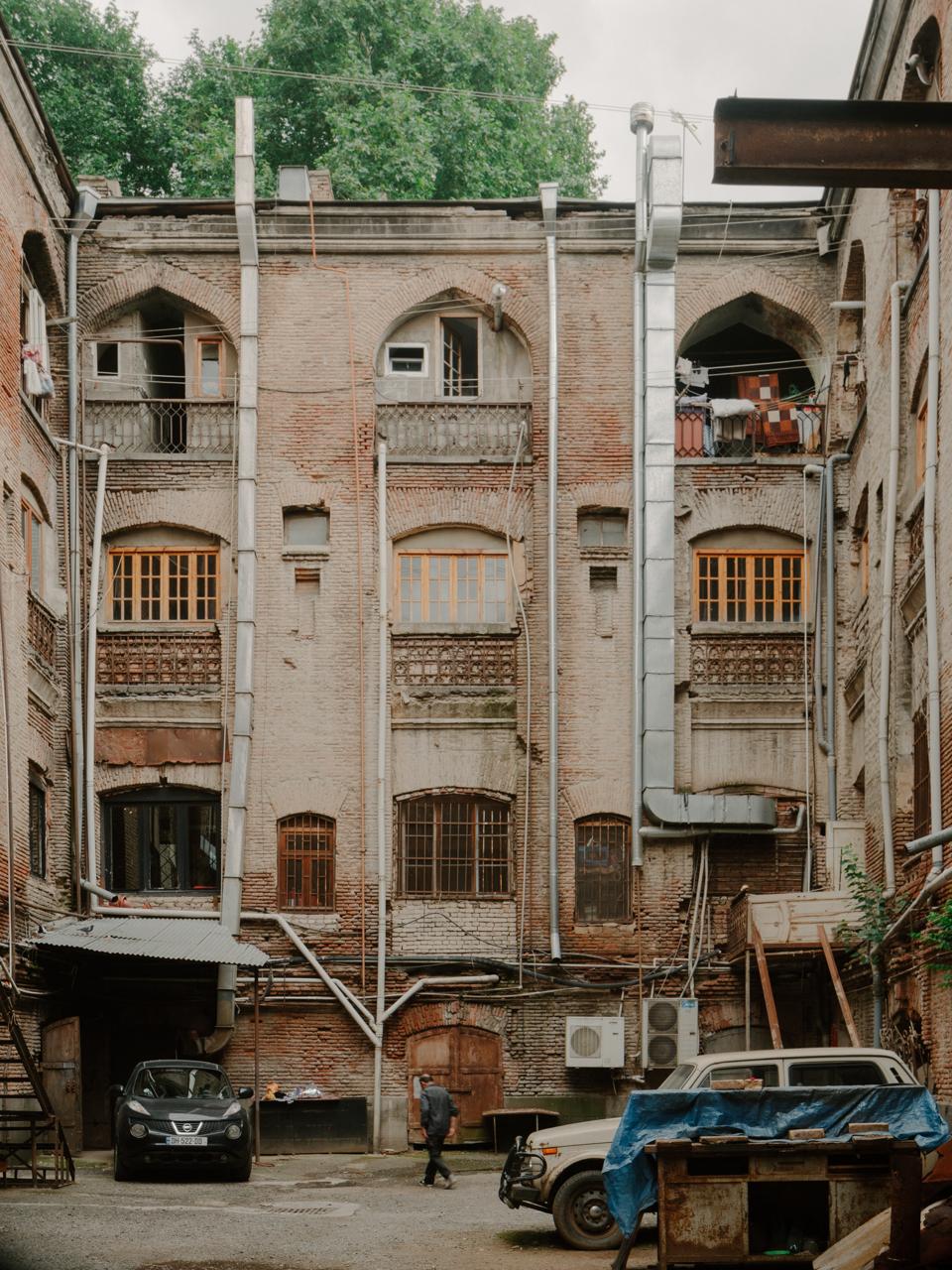
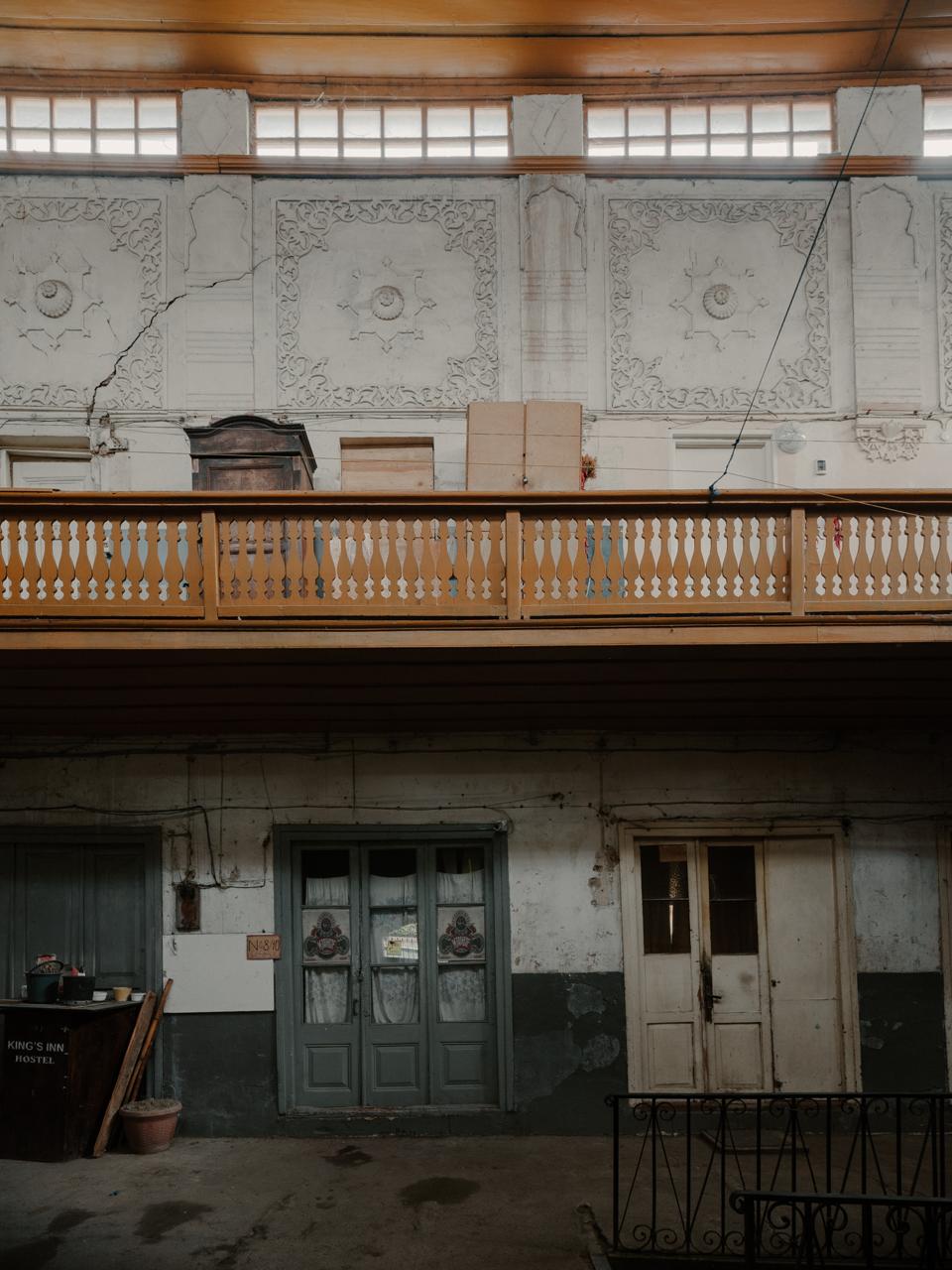
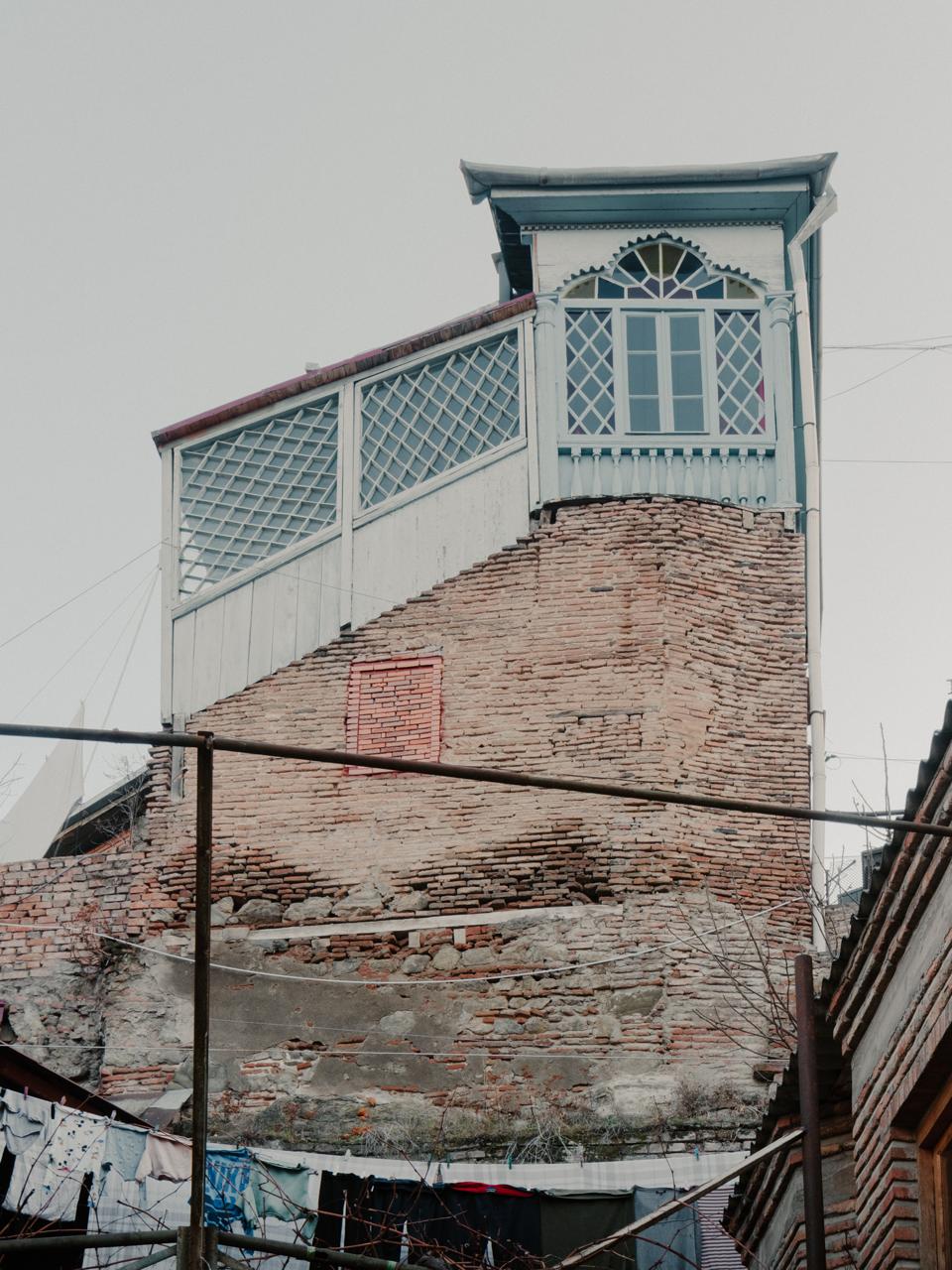
Kala—one of the oldest parts of Tbilisi—developed on the right bank of the Mtkvari River beneath the fortress of Narikala Fortress. The district’s name originally referred to the citadel before gradually expanding to describe the settlement below its walls. Although the area was repeatedly destroyed and rebuilt—most notably after the Persian invasion of 1795—it retained much of its medieval urban structure.
The guidebook begins with the landscape that defines Kala: buildings embedded into the cliffside terrain beneath Narikala. It then moves through the district’s dense network of narrow streets, whose irregular geometry reflects both topography and historical development. Many street names recall the crafts once practiced here—painters, goldsmiths, shoemakers, and pot menders—while bazaars and market streets connected Tbilisi to wider regional trade networks.
Squares form another layer of Kala’s spatial and social life. Historically used as gathering places and markets, they mark key nodes within the district’s evolving urban structure.
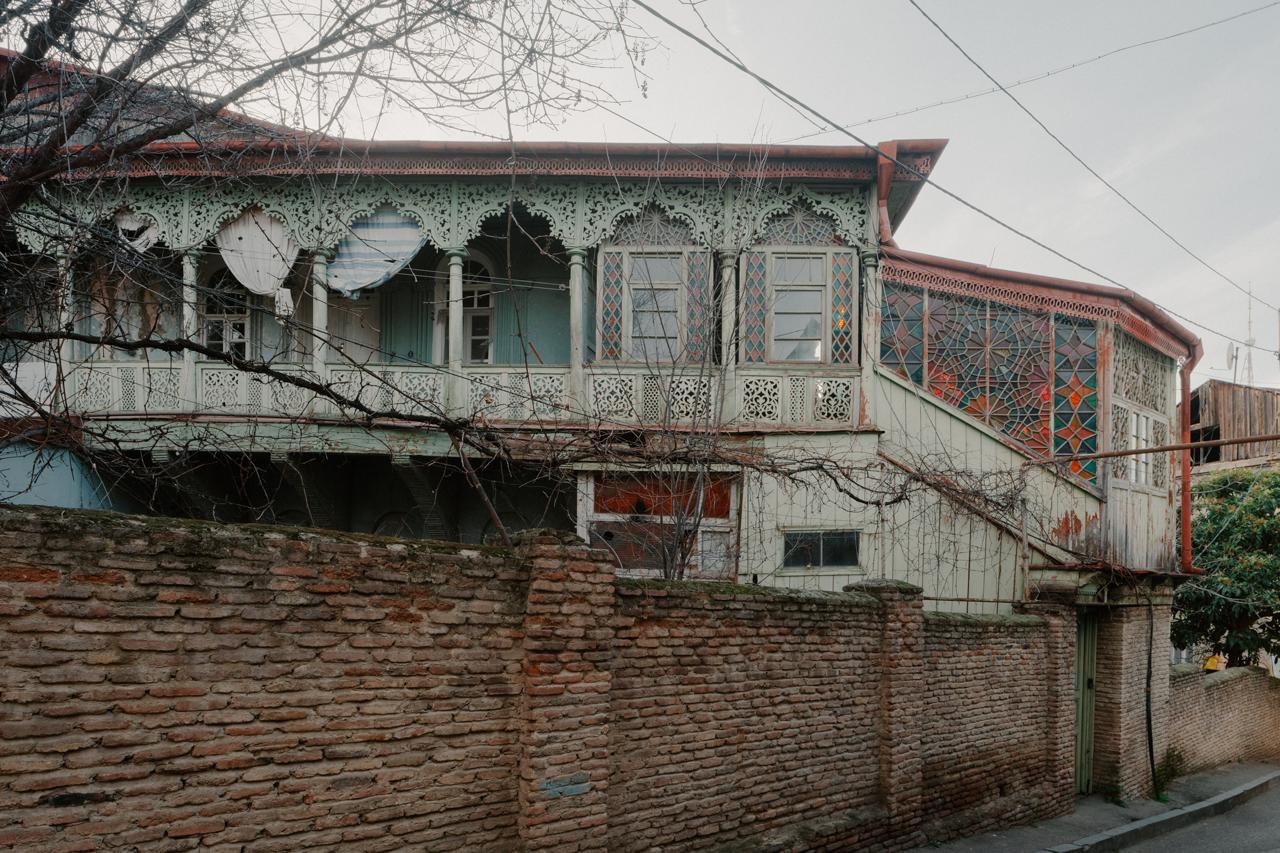
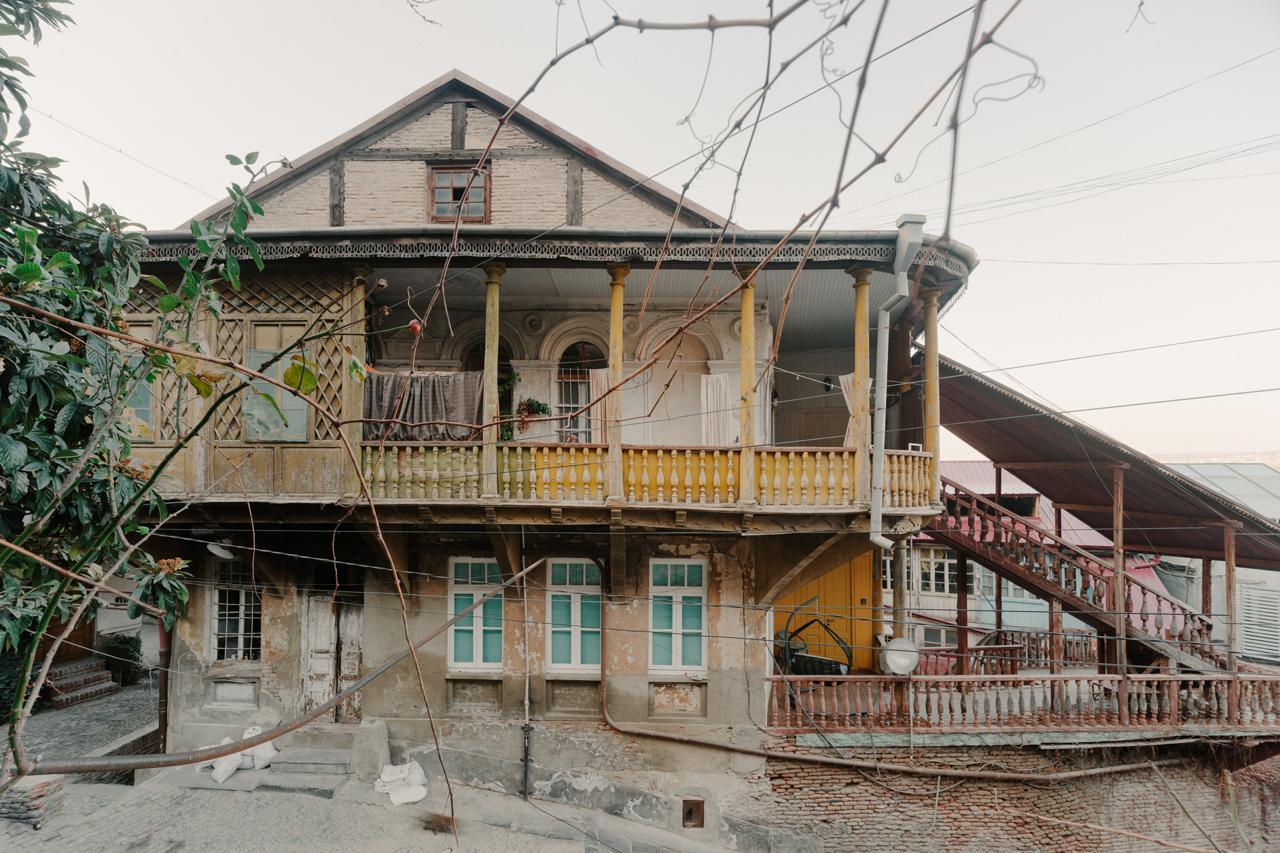
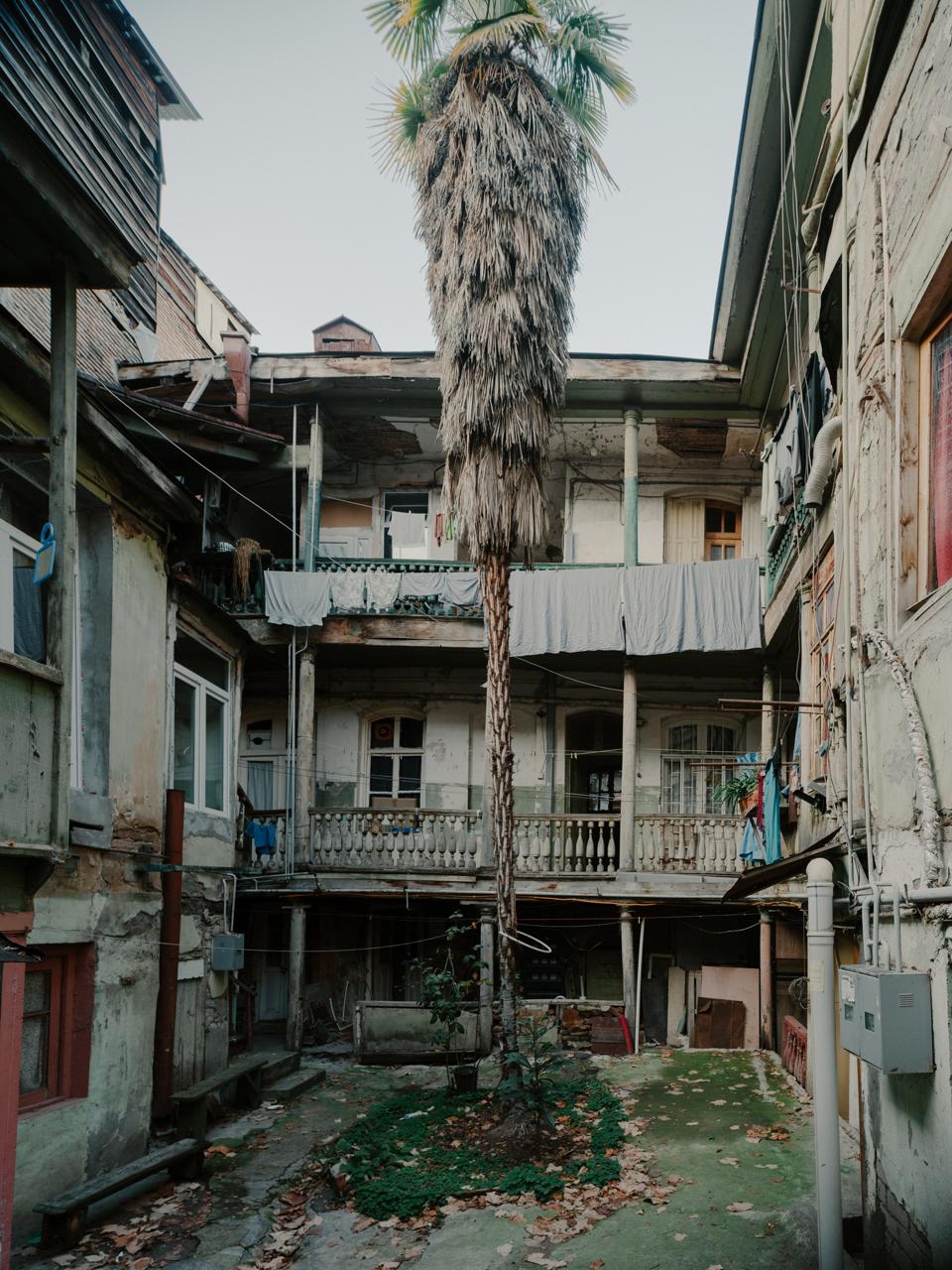
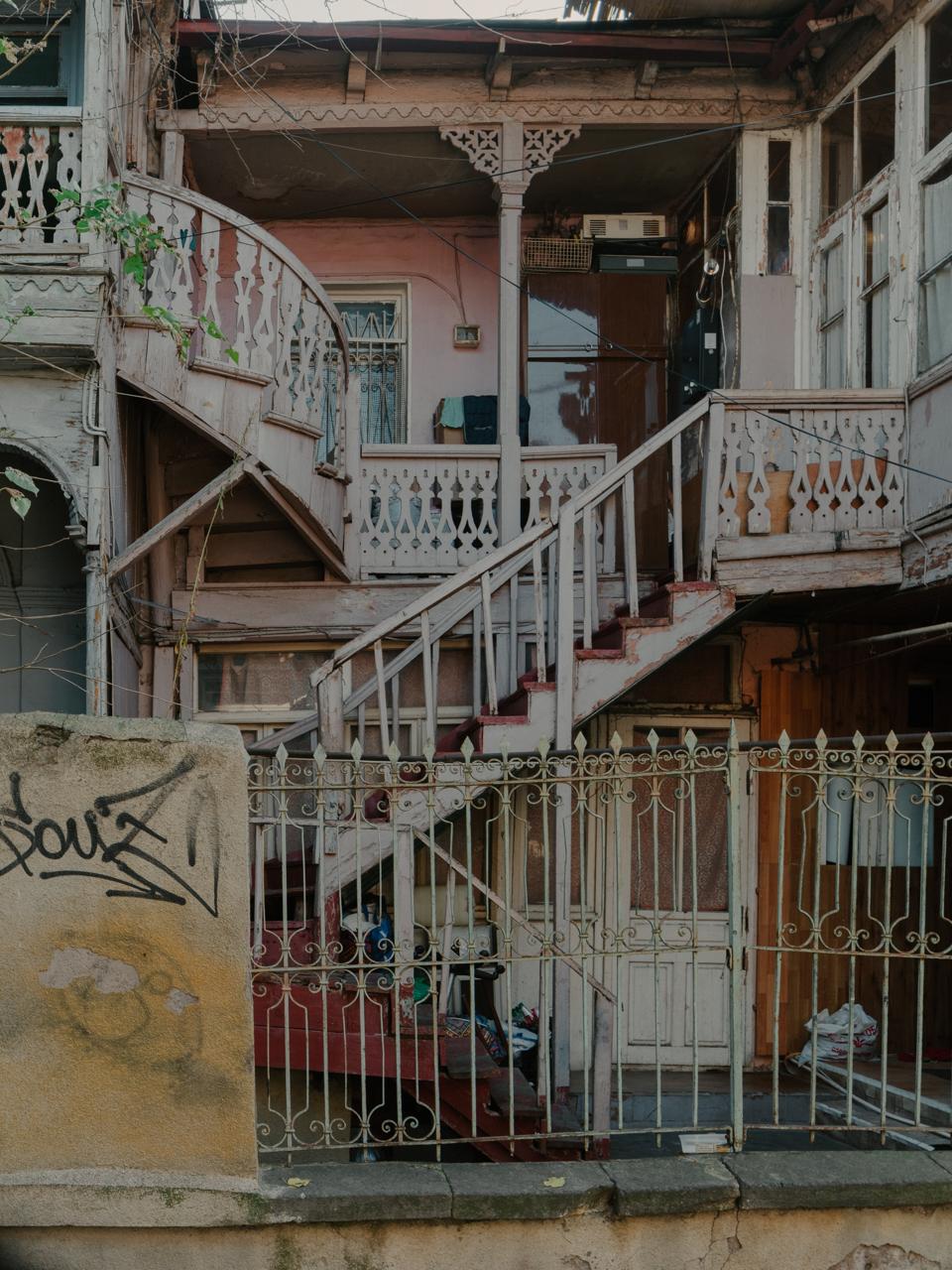
The central section of the book focuses on buildings: a heterogeneous collection of residential houses, religious structures, caravanserais, educational institutions, and commercial spaces. Many two-story houses from the nineteenth and early twentieth centuries are distinguished by outdoor stairways, wooden balconies, and glazed loggias. Religious landmarks—including churches, a synagogue, a mosque, and the historic fire temple known as Ateshgah of Tbilisi—reflect the district’s long-standing cultural and religious diversity.
The guide then turns to Kala’s courtyards, where architectural details—balconies, staircases, galleries—intersect with the communal life of residents. It concludes with the district’s connections: a network of semi-public passages linking streets, courtyards, and buildings through a system of hidden shortcuts. Often absent from official maps, these routes pass through archways, corridors, and stairways, forming an alternative spatial logic known primarily to local residents.
By documenting these overlooked connections and spatial practices, Kala Guidebook proposes a alternative way of experiencing Tbilisi—revealing the district not only as a historic site, but as a layered urban environment shaped by everyday navigation, memory, and encounter.